


In 2025, the culinary world continues to embrace the irresistible “sweet-meets-spicy” phenomenon. From Taco Bell’s Mike’s Hot Honey Diablo Sauce to Cedar’s Mediterranean Hot Honey Dip, chefs and home cooks alike are layering sugar and heat to craft multidimensional flavor experiences. Yet this trend is far from new—centuries ago, Chinese cuisine pioneered sauces and dishes that marry sweetness with spice, long before “hot honey” became a viral sensation.
As a leading provider of Chinese seasonings, Ruikelai food ingredients, and savory soluciones de sabor, Qingdao Ruikelai Food Ingredients Co., Ltd. understands the backbone of every great sweet-spicy creation: the right balance of heat, sweetness, and depth. In this in-depth exploration, we’ll trace the evolution of sweet-spicy profiles from Western condiments back to their Chinese roots, spotlight the iconic sweet-spicy noodles of Chongqing, and uncover a spectrum of Chinese dishes that continue to inspire global palates.
1.1 Western Innovations: Diablo Sauce & Hot Honey Dip
These products exemplify the modern fascination with layered tastes, but the building blocks—honey for sweetness, chili for heat—have long been tradition in Asian kitchens.
1.2 Why Sweet and Spicy Sells
Long before Western fast-food chains leaned into hot honey, Chinese cooks mastered sweet-spicy through sauces, marinades, and noodle bowls.
2.1 Chongqing Sweet-Spicy Noodles (重庆甜辣面)
2.2 Shanxi Liangpi (陕西凉皮) with Sweet-Spicy Sauce
2.3 Sichuan Dan Dan Noodles (担担面)
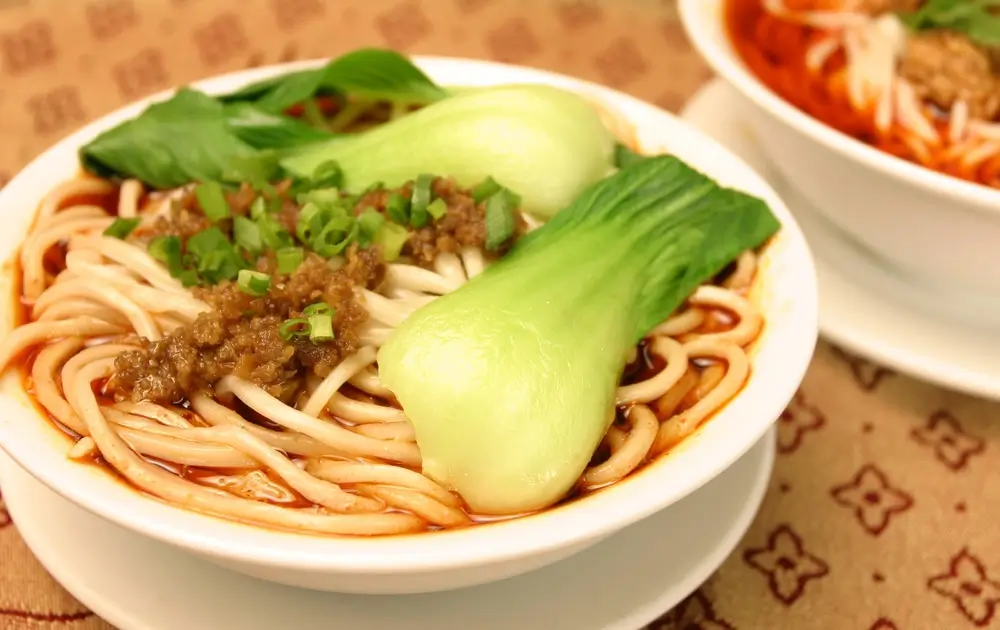
While noodles are the poster child for Chinese sweet-spicy cuisine, numerous dishes showcase this flavor marriage:
3.1 Kung Pao Chicken (宫保鸡丁)
3.2 Sweet and Spicy Pork Ribs (糖醋排骨加辣版)
3.3 Mapo Tofu (麻婆豆腐) with Honey Drizzle
3.4 Spicy Sweet Lotus Root (香辣糖藕片)
3.5 Sweet-Spicy Mala Hot Pot (香辣麻辣火锅)
Below is a comparative table of sweet-and-spicy sauces and dishes:
| Nombre | Origin/Style | Key Ingredients | Sweet Component | Spicy Component | Typical Use |
|---|---|---|---|---|---|
| Mike’s Hot Honey Diablo Sauce | American Fusion | Honey, cayenne, chipotle, vinegar | Mike’s Hot Honey | Cayenne & chipotle | Glazes, wings, sandwiches |
| Cedar’s Mediterranean Hot Honey Dip | Mediterranean-inspired | Honey, cream cheese, garlic, chili flakes | Honey | Chili flakes | Dipping cheese, crudité, flatbreads |
| Chongqing Sweet-Spicy Noodles (面) | Chongqing, China | Wheat noodles, chili oil, rock sugar, Sichuan peppercorns | Rock sugar (or honey) | Chili oil, Sichuan peppercorns | Street-style noodle bowls |
| Kung Pao Chicken (宫保鸡丁) | Sichuan, China | Chicken, peanuts, soy, vinegar, sugar, dried chilies | Sugar | Dried chilies, Sichuan peppercorns | Stir-fried entrée with rice or noodles |
| Sweet & Spicy Pork Ribs (糖醋排骨辣版) | Cantonese-influenced | Pork ribs, vinegar, sugar, soy, fresh chilies | Cane sugar or honey | Fresh chilies | Appetizer or main, often with steamed rice |
| Mapo Tofu with Honey Drizzle (麻婆豆腐) | Sichuan-modern | Tofu, doubanjiang, peppercorns, sesame oil, honey drizzle | Honey drizzle | Doubanjiang (fermented chili bean paste) | Main course, served with rice |
| Spicy Sweet Mala Hot Pot (麻辣火锅) | Sichuan, China | Chili oil, doubanjiang, Sichuan pepper, sugar | Spoonful of sugar/caramel | Dried chilies, Sichuan peppercorns | Communal hot pot broth |
| Powdered Hot Honey Simulation | Industrial Seasoning | Maltodextrin-encapsulated chili extract, dehydrated honey | Dehydrated honey solids | Encapsulated chili extract | Snack coatings, seasoning sachets |
At Qingdao Ruikelai, we harness 25 years of experience in flavor production to formulate Chinese seasonings and Ruikelai food ingredients that empower chefs to achieve consistent sweet-spicy masterpieces:
4.1 Signature Sweet-Spicy Seasoning Blend
4.2 Liquid Sweet-Spicy Marinade Base
4.3 Powdered Hot Honey Simulation
Creating successful sweet-spicy products requires mastery over ingredient interactions:
5.1 Balancing Heat Intensity
5.2 Sweetness Control
5.3 Emulsification & Stability
As the best Chinese flavor manufacturer since 2000, we guide clients through positioning sweet-spicy offerings for modern consumers:
6.1 Clean-Label Messaging
6.2 Allergen & Dietary Claims
6.3 Packaging & Portability
Desafío: A nationwide chain of fast-casual restaurants in Asia wanted a proprietary sweet-spicy chicken wing glaze that could be batch-produced and shipped fridge-stable.
Solución:
Resultado:
8.1 Novel Sweeteners & Spices
8.2 Digital Flavor Design
8.3 Sustainable Sourcing
The journey from Diablo Sauce to Hot Honey Dip underscores a universal truth: sweet-spicy flavors resonate across cultures. Yet it is in the traditions of Chinese cuisine—from Chongqing’s sweet-spicy noodles to the nuanced sauces of Sichuan and beyond—where this flavor marriage has deep roots.
As you explore these trends in 2025, remember that meticulous formulation, authentic Chinese seasonings, and top-tier Ruikelai food ingredients form the backbone of every successful product. Whether you’re a central kitchen seeking consistency, a food factory scaling snack lines, or a hotel kitchen innovating menus, our 25 years of experience in flavor production ensure that your sweet-spicy creations captivate taste buds, comply with global standards, and tell a story of culinary heritage.
Embrace the sweet-spicy revolution today—and let Qingdao Ruikelai be your partner in crafting the next viral sensation.
Los potenciadores del sabor de etiquetado limpio son compuestos de origen vegetal (por ejemplo, extractos de levadura, aminoácidos) que amplifican el umami y el sabor en general sin productos químicos sintéticos como el glutamato monosódico. Actúan uniéndose a los receptores gustativos para potenciar la profundidad del sabor y la sensación en boca, aportando una complejidad estratificada a salsas, sopas y aperitivos. .
Las instalaciones de Ruikelai cuentan con las certificaciones ISO 22000 (gestión de la seguridad alimentaria) e ISO 9001 (gestión de la calidad), lo que demuestra el cumplimiento de las normas mundiales de calidad y seguridad alimentaria. También contamos con las certificaciones Halal y FDA FFR, que garantizan la plena trazabilidad y la armonización reglamentaria en los principales mercados. .
La implantación de sistemas de trazabilidad sólidos reduce los residuos, mejora el control de inventarios y agiliza las retiradas de productos al documentar cada lote desde la materia prima hasta el producto acabado. Esto no sólo protege contra la contaminación, sino que también mejora el cumplimiento de la normativa y la confianza del consumidor.
Los conservantes naturales -como el aceite de romero, los polifenoles del té verde y los extractos de tomillo- ofrecen propiedades antimicrobianas y antioxidantes sin residuos químicos, prolongando la vida útil en más de 20% y cumpliendo las exigencias de las etiquetas limpias. Su acción multifuncional a menudo supera la eficacia de los sorbatos o benzoatos en condiciones reales de almacenamiento.
ResearchGate.
Los estabilizadores coloidales (p. ej., goma xantana, goma guar, nanocelulosa) mantienen la textura uniforme de la emulsión evitando la coalescencia de las gotas, la formación de nata y la separación de fases. Las técnicas avanzadas de micronización mejoran aún más la dispersabilidad y la sensación en boca, proporcionando una calidad constante en todos los lotes y una mayor estabilidad de almacenamiento.

 EN
EN ZH
ZH ZH_TW
ZH_TW MS
MS VI
VI JA
JA KO
KO ID
ID FR
FR DE
DE ES
ES EO
EO DE_CH
DE_CH KK
KK RU
RU TR
TR